
Losing a tooth can affect much more than the appearance of your smile. A missing tooth may change how comfortably you chew, influence how clearly you speak, and gradually allow nearby teeth to shift out of position. Over time, the bone that once supported the missing tooth can also begin to shrink.
Dental implants are designed to address many of these concerns, but they usually require a larger initial investment than other tooth replacement options. That naturally leads many patients to ask two important questions: How much do implants cost in NC, and are dental implants worth it?
The answer depends on your oral health, the number of teeth being replaced, the treatment required, and what you value in a long-term restoration. For many patients in Apex and the surrounding Wake County communities, a dental implant can be a worthwhile investment because it is stable, natural-looking, and designed to function much like a real tooth.
Understanding the full value of treatment requires looking beyond the initial price. Here is a practical breakdown of dental implants cost in Apex, NC, what may be included in treatment, and how implants compare with other ways to replace a missing tooth.
What Is a Dental Implant?
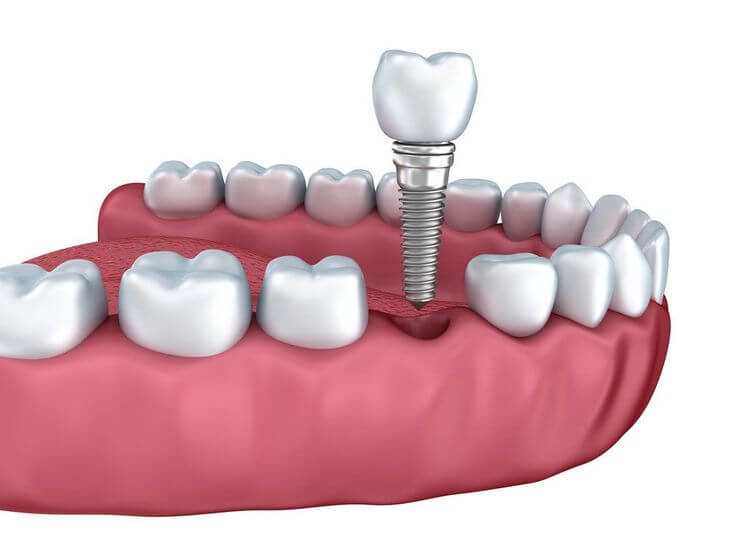
A dental implant is a small post that is placed in the jawbone to replace the root of a missing tooth. Most modern dental implants are made from biocompatible materials, such as titanium, that can integrate with the surrounding bone.
After the implant has healed and become stable, it can support a custom dental crown. The crown is the visible portion of the restoration and is shaped and shaded to blend with the surrounding teeth.
A single implant restoration usually consists of three main components:
- The implant post
- An abutment that connects the implant to the restoration
- The dental crown
Implants may also be used to support a bridge or stabilize a full arch of replacement teeth when several or all teeth are missing.
Because an implant replaces both the visible tooth and its root structure, it works differently from a traditional bridge or removable denture.
How Much Do Implants Cost in NC?
There is no universal price for dental implant treatment. When patients search for how much do implants cost NC, they may encounter advertised prices that vary widely. That variation often occurs because different quotes may include different parts of the treatment.
One price may cover only the implant post. Another may include the implant, abutment, crown, imaging, surgical placement, and follow-up appointments. Comparing prices without knowing exactly what is included can create confusion.
The total dental implants cost in Apex, NC may be affected by:
- The number of implants needed
- The type of final restoration
- Whether a tooth must first be removed
- The condition of the jawbone and gums
- Whether bone grafting is necessary
- The location of the missing tooth
- The materials used for the crown or bridge
- Sedation or comfort options
- Dental insurance benefits
- The complexity of the individual case
A straightforward single-tooth implant will generally cost less than replacing several teeth or restoring an entire dental arch. However, even two patients who each need one implant may receive different treatment plans based on their bone levels, gum health, bite, and the location of the tooth.
The most reliable way to determine your expected cost is to have a complete examination and receive a written treatment plan that clearly explains each stage.
Why the Advertised Implant Price May Not Be the Final Price
Low advertised implant prices can be appealing, especially when you are trying to make treatment fit within a budget. However, it is important to ask what the quoted price actually includes.
An advertisement may refer only to the surgical implant component. It may not include the abutment, custom crown, diagnostic imaging, tooth extraction, grafting, sedation, or follow-up care. In some cases, the final restoration may be billed separately.
Before comparing one office with another, ask whether the estimate includes:
- The implant post
- The abutment
- The final crown
- Diagnostic imaging
- Surgical planning
- Tooth removal, when necessary
- Bone grafting, when necessary
- Follow-up visits
- Temporary tooth replacement
- Sedation, when requested or recommended
A complete treatment estimate may initially appear higher than an advertised base price, but it can provide a more accurate picture of the total investment.
At Apex Dental Group, patients can discuss their treatment options and expected expenses before making a decision. The goal is to help you understand not only the proposed treatment, but also what is included and why each step may be recommended.
Are Dental Implants Worth It?
For many qualified patients, dental implants are worth considering because they provide several long-term advantages that other tooth replacement options may not offer.
An implant is fixed in place and does not need to be removed for cleaning. It can help restore chewing ability, support a natural-looking smile, and reduce the need to alter neighboring healthy teeth. Because the implant is anchored in the jawbone, it may also help preserve bone in the area where the tooth was lost.
Whether an implant is worth the cost for you depends on your goals. Some patients place the greatest value on having a replacement tooth that feels stable. Others want to avoid preparing adjacent teeth for a traditional bridge. Many want a restoration that blends naturally with their smile and does not shift during meals or conversations.
The question is not simply whether implants cost more at the beginning. It is whether the long-term function, convenience, comfort, and durability justify the investment for your circumstances.
The Long-Term Value of a Dental Implant
Dental implant treatment often has a higher upfront price than a removable partial denture or, in some situations, a traditional bridge. However, initial price and long-term value are not always the same.
A removable appliance may need periodic adjustments, relining, repair, or replacement as the mouth changes. A dental bridge may eventually require replacement, and preparing the bridge usually involves reshaping the teeth on either side of the missing space.
An implant does not rely on neighboring teeth for support. With appropriate care, the implant itself may remain functional for many years. The crown attached to it can experience wear and may eventually need maintenance or replacement, just as a natural tooth or traditional crown can.
This does not mean that an implant is maintenance-free. Daily brushing, cleaning around the restoration, regular dental visits, and healthy gum tissue are all important. Smoking, uncontrolled medical conditions, untreated gum disease, and inconsistent home care can increase the risk of complications.
Still, when treatment is properly planned and the implant is well maintained, many patients consider the long-term stability and convenience to be worth the initial cost.
Dental Implant Versus a Traditional Bridge
A traditional dental bridge replaces a missing tooth by using the neighboring teeth as supports. Those teeth are prepared for crowns, and the replacement tooth is attached between them.
A bridge can be an effective treatment, especially when the supporting teeth already need crowns. It may also provide a faster solution in cases where implant healing would require several months.
However, when the teeth next to the space are healthy and have not been heavily restored, an implant may offer an important advantage. The implant can replace the missing tooth without requiring the adjacent teeth to be reshaped.
Cleaning is also different. A bridge requires the patient to clean underneath the replacement tooth using floss threaders or other tools. An implant crown is generally cleaned more like an individual tooth, although special attention around the gumline remains important.
The better option depends on the condition of the neighboring teeth, bone availability, budget, timing, and patient preferences.
Dental Implant Versus a Removable Partial Denture
A removable partial denture is often one of the more affordable ways to replace one or several missing teeth. It can be removed for cleaning and may be completed without implant surgery.
For some patients, a partial denture is a practical and appropriate choice. However, it may not provide the same level of stability as a dental implant. Some removable appliances can move slightly while eating or speaking, and they may require periodic adjustment as the shape of the gums and jaw changes.
A single implant crown is fixed in the mouth and does not need to be taken out at night. It also does not typically use clasps that attach to nearby teeth.
The difference in cost reflects a difference in treatment design. A removable partial replaces the visible portion of a tooth and relies on the gums and remaining teeth for support. An implant replaces the tooth root and supports a fixed restoration.
Does a Dental Implant Feel Like a Natural Tooth?
Once an implant has healed and the final crown has been placed, many patients report that the restoration feels much more like a natural tooth than a removable appliance.
The implant itself does not have the same nerves as a natural tooth, so it does not feel pressure or temperature in exactly the same way. However, the surrounding tissues and bite still provide sensory feedback. Most patients become accustomed to the implant and use it comfortably during normal chewing.
The crown is customized for size, shape, color, and bite. In visible areas, careful planning is especially important to create a natural result. Implant dentistry involves both function and esthetics, particularly when replacing a front tooth.
No dental restoration can perfectly duplicate every feature of a natural tooth. Even so, a well-designed implant can come close in appearance, stability, and everyday function.
Does Insurance Cover Dental Implants?
Dental insurance coverage varies considerably. Some plans provide partial benefits for implant treatment, while others may cover only certain portions, such as the crown, extraction, or related procedures. Some plans may exclude implants entirely or apply a waiting period.
Even when implants are covered, annual benefit maximums may limit how much the plan pays during a calendar year. Medical insurance may occasionally contribute when tooth loss is related to an accident or qualifying medical condition, but coverage is highly case-specific.
Patients should not assume that an insurance plan will either fully cover or completely exclude treatment. A benefit check can help clarify:
- Whether implants are a covered service
- The percentage the plan may pay
- Whether a waiting period applies
- Whether there is a missing tooth clause
- The remaining annual maximum
- Whether preauthorization is recommended
Insurance is only one part of the financial decision. Financing options, phased treatment, health savings accounts, and flexible spending accounts may also make care more manageable.
Can Implant Treatment Be Completed in Stages?
Yes. Dental implant treatment is commonly completed in stages, and those stages may occur over several months.
The process may begin with removing a damaged tooth or rebuilding areas of bone loss. The implant is then placed and allowed time to integrate with the jawbone. After healing, the abutment and final crown are added.
In certain situations, some steps can be combined. A tooth may be removed and an implant placed during the same appointment. A temporary restoration may sometimes be provided while the implant heals. However, immediate treatment is not appropriate for everyone.
Staging treatment can also affect when expenses are due. Instead of paying for every component at once, patients may pay as each phase is completed. The exact financial policy depends on the dental office and treatment plan.
Why Bone Grafting Can Affect Dental Implant Cost
A dental implant needs adequate bone for support. After a tooth is lost, the surrounding jawbone can gradually decrease in height and width. Gum disease, infection, trauma, and long-term tooth loss may increase the amount of bone loss.
Bone grafting is a procedure used to rebuild or preserve the implant site. A small graft may be placed when a tooth is removed, or a larger graft may be necessary before implant placement.
Not every patient needs grafting. When it is recommended, it adds time and cost to treatment, but it may be essential for creating a stable foundation. Skipping a necessary graft simply to reduce the initial price can compromise the predictability or positioning of the implant.
Advanced imaging helps the dentist evaluate bone dimensions and determine whether grafting may be needed.
What Makes Someone a Good Candidate for a Dental Implant?
Many adults with missing teeth can be considered for dental implants, but each patient requires an individual evaluation.
A good candidate generally has healthy gum tissue, enough bone to support the implant, and medical health that permits normal healing. Patients should also be willing to maintain consistent oral hygiene and attend regular dental visits.
Certain factors do not automatically disqualify someone, but they may require additional planning. These can include smoking, diabetes, a history of gum disease, teeth grinding, significant bone loss, or medications that affect bone healing.
Age alone is rarely the deciding factor for adults. Overall health, oral health, bone condition, and the ability to maintain the restoration are typically more important.
For younger patients, implant placement is usually delayed until jaw growth is complete.
How Long Does the Dental Implant Process Take?
The total timeline varies from patient to patient. A relatively straightforward implant may require several months from placement to the final crown. Cases involving grafting, infection, or multiple stages may take longer.
Although the treatment timeline can feel lengthy, much of that time is devoted to healing. The implant needs time to become stable within the jawbone before it supports the final restoration.
Patients should be cautious about comparing treatment solely based on speed. Faster care is not always better care. The timing should reflect the biology of healing and the specific needs of the patient.
A temporary tooth may be available during the healing period, particularly when the missing tooth is visible in the smile.
What Happens If You Do Not Replace a Missing Tooth?
Not every missing tooth causes an immediate problem, but leaving a space untreated can lead to gradual changes.
Nearby teeth may tilt or drift toward the empty space. The opposing tooth may move farther into the gap because it no longer has a tooth to bite against. These changes can affect the bite and make the area more difficult to clean.
Bone loss can also occur because the jaw is no longer receiving stimulation from the missing tooth root. The amount and rate of change vary, but delaying treatment may sometimes make future implant placement more complicated.
A missing tooth can also shift chewing pressure to the remaining teeth. Depending on the location, this may contribute to uneven wear or make certain foods more difficult to eat.
Replacing a tooth is not only a cosmetic decision. It may help maintain the organization, function, and health of the entire mouth.
When a Dental Implant May Not Be the Best Choice
Dental implants offer many benefits, but they are not automatically the right solution for every patient.
An implant may not be recommended when there is active, uncontrolled gum disease or an untreated infection. Certain medical conditions or medications may affect healing and require consultation with a physician. A patient who is unable or unwilling to maintain daily oral hygiene may also face a greater risk of implant complications.
Financial priorities and treatment preferences matter as well. Some patients prefer a non-surgical option or need a replacement tooth sooner than an implant timeline allows. Others may choose a bridge because the adjacent teeth already require crowns.
A trustworthy treatment discussion should include reasonable alternatives rather than presenting implants as the only acceptable choice.
Questions to Ask Before Choosing a Dental Implant
Before moving forward, make sure you understand the treatment plan and the total expected investment. Useful questions include:
- What is included in the quoted fee?
- Will I need an extraction or bone graft?
- How many appointments are expected?
- Will I have a temporary tooth while the implant heals?
- What type of final restoration will be used?
- What are the alternatives to an implant?
- What happens if the implant does not integrate?
- What maintenance will the implant require?
- Will my insurance provide any benefits?
Clear answers can help you compare your options and make a decision based on your health, priorities, and budget rather than price alone.
How to Protect Your Investment
The value of a dental implant depends partly on how well it is maintained. While the implant cannot develop a cavity, the gum and bone surrounding it can become inflamed or infected.
Brush thoroughly twice a day and clean around the implant as directed. Depending on the restoration, your dental team may recommend floss, interdental brushes, a water flosser, or other tools.
Regular professional examinations allow the dentist to monitor the gum tissue, bite, crown, and supporting bone. If you grind or clench your teeth, a protective nightguard may be recommended to reduce stress on the implant and restoration.
Avoiding tobacco is also important. Smoking can interfere with healing and may increase the risk of long-term implant complications.
So, Are Dental Implants Worth It for Apex Patients?
For many patients, the answer is yes. A dental implant may be worth the cost when you want a stable, fixed tooth replacement that supports natural chewing, preserves neighboring teeth, and closely resembles a real tooth.
However, value is personal. The best option is the one that fits your oral health, long-term goals, timeline, and financial circumstances. A bridge or removable appliance may be more appropriate in certain situations.
When evaluating dental implants cost in Apex, NC, look beyond a single advertised number. Consider what is included, whether additional procedures are needed, how the restoration may function over time, and what maintenance each alternative requires.
A complete examination at our dental clinic in Apex, NC can help determine whether you are a candidate and provide a personalized estimate. With a clear understanding of the benefits, limitations, timeline, and total cost, you can make an informed decision about whether a dental implant is the right investment for your smile.