Dental Implants in Apex, NC

A missing tooth changes more than your smile. It changes how you chew, how you talk, and over time it can change the shape of your jaw. Dental implants are titanium posts placed into the jawbone that act as replacement roots. Once healed, they hold a crown, bridge, or denture that looks and works like a real tooth.

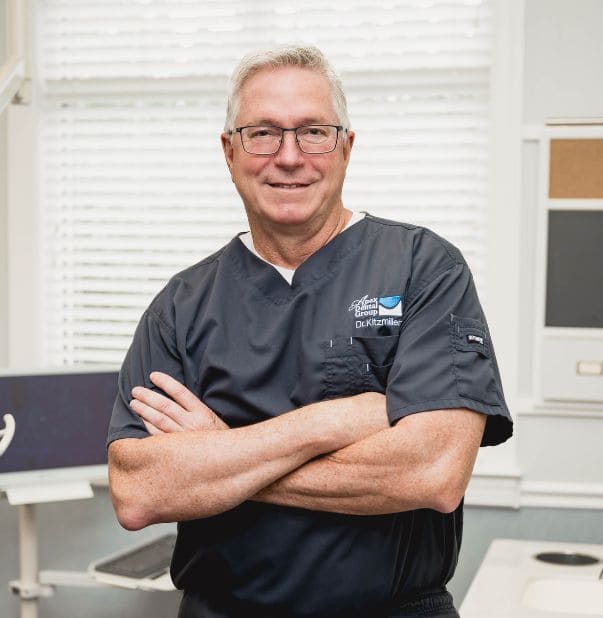
At Apex Dental Group, implant treatment is planned and placed by Dr. John S. Kitzmiller, DDS. He has been doing this for over 20 years and completed advanced implant training at the Triangle Dental Institute. If you are missing one tooth or several, a consultation is the place to start.

Over 400 Five-Star Reviews

What are dental implants?

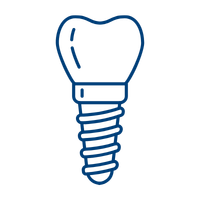
A dental implant is a small titanium post that goes into your jawbone where a tooth used to be. Over a few months, the bone grows around the post and locks it in place. Dentists call this process osseointegration. Once the implant is solid, a custom crown, bridge, or denture is attached on top.

Unlike a bridge, an implant does not depend on the teeth next to it for support. It stands on its own. That means your healthy teeth stay untouched, and the bone in the area where you lost the tooth keeps getting the stimulation it needs instead of slowly breaking down.

With regular brushing, flossing, and dental checkups, implants can function reliably for many years. The crown on top may need replacement eventually, but the post itself is built to last.

What our patients say

Over 400 five-star Google reviews from patients in Apex, Cary, Holly Springs, and the surrounding area. Patients regularly mention Dr. Kitzmiller’s thoroughness, the team’s patience with questions, and how well the whole process was explained before anything started.

Implant options we offer

Not every missing tooth situation is the same. Dr. Kitzmiller evaluates your bone density, how many teeth are missing, and where the gaps are before recommending a specific approach.

Single tooth implants

One implant, one crown. This is the most common setup when a single tooth is missing. The implant replaces the root, and a custom crown is made to match the color and shape of the teeth around it. The bone in that spot stays healthy because the implant gives it something to hold onto.
Implant-supported bridges

When two or more teeth are missing next to each other, a bridge anchored to implants can fill the gap. Unlike a traditional bridge, this version does not require grinding down the healthy teeth on either side. The implants carry the load.
Implant-supported dentures

If you wear dentures that slide around when you eat or talk, implant-supported dentures are worth looking into. A few implants anchor the denture in place so it stays put. Eating is easier, speaking is clearer, and you stop worrying about the thing shifting at the wrong moment.
Full-arch implants

Full-arch treatment replaces an entire row of upper or lower teeth using multiple implants as anchors. This is a fixed option, meaning the teeth stay in your mouth. Patients who are tired of dealing with removable dentures often choose this route. The number of implants depends on your bone density and bite.
Implants compared to other tooth replacements

Feature Dental Implants Dental Bridge Removable Denture
Anchored in jawbone
Yes
No, attached to adjacent teeth
No, rests on gums
Preserves bone
Preserves bone
No
No, bone loss continues
Affects healthy teeth
No
Yes, neighboring teeth are reshaped
No
Stability
Fixed in place
Fixed but depends on anchor teeth
Can slip or shift
Typical lifespan
Many years with proper care
5 to 15 years
5 to 10 years, relines needed
Eating ability
Comparable to natural teeth
Good for most foods
Some food restrictions
Maintenance
Brush and floss normally
Brush and floss with extra care around anchor teeth
Remove and clean daily

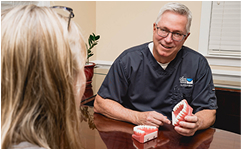
Dr. Kitzmiller goes over all of these options during your consultation so you can weigh the tradeoffs and pick what fits your situation.

Related services

Your Apex dentist: Dr. John S. Kitzmiller III, DDS

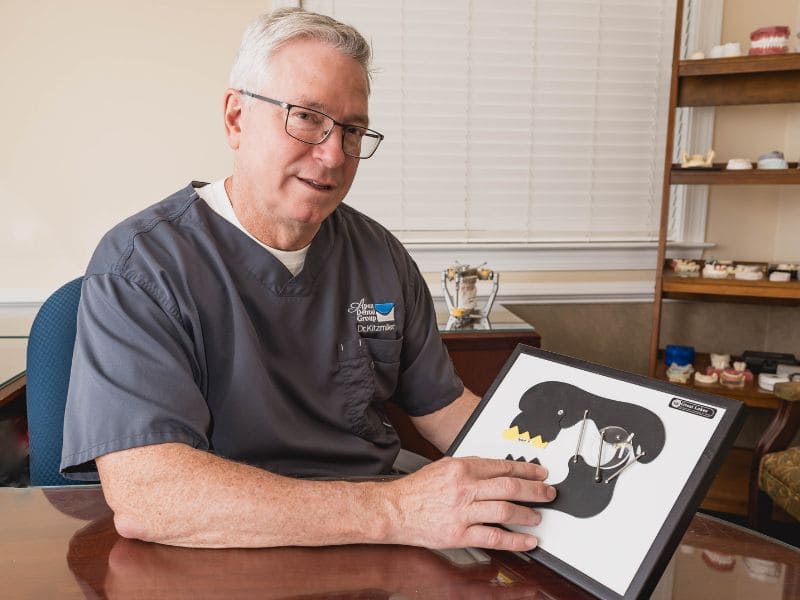
Dr. Kitzmiller has been placing and restoring dental implants in Apex since 2002. He went to dental school at UNC Chapel Hill and then served 12 years as a Dental Officer in the U.S. Army, treating patients in Germany, Africa, Bosnia, and across the United States.

After the military, he completed advanced implant training at the Triangle Dental Institute and opened Apex Dental Group. He is board-certified in Comprehensive Dentistry by the Federal Services Board. Over two decades of implant cases means he has worked with a wide variety of bone conditions, bite patterns, and restoration types.

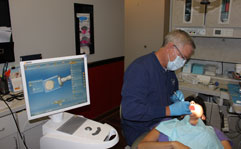
He also uses cone beam 3D imaging to plan implant placement before surgery, which helps him identify the right position, angle, and depth for each post. You can see the scan and the plan on the chair-side monitor before anything starts.

Honors and Affiliations

How the dental implant process works

Implant treatment takes several months from start to finish. Most of that time is healing, not procedures. Here is what to expect at each stage.

Step 1
Consultation and imaging

We start with a full exam, digital X-rays, and in most cases cone beam 3D imaging. This shows us your bone density, nerve positioning, and how much space is available for the implant. Dr. Kitzmiller uses this information to build a treatment plan and walks you through it before scheduling anything.

Step 2
Preparatory work (if needed)

Some patients need bone grafting or a sinus lift before an implant can be placed. Bone grafting adds material to areas where the jaw has thinned out after tooth loss. A sinus lift creates room in the upper back jaw where the sinus sits close to the bone. Not everyone needs these procedures, but when they are necessary, they improve the odds of a solid result.

Step 3
Implant placement

The titanium post is placed into the jawbone under local anesthesia. Most patients say the procedure itself is less uncomfortable than they expected. You go home the same day.

Step 4
Healing and osseointegration

This is the longest phase. Over 3 to 6 months, the bone grows around the implant and locks it in place. During this time, you can eat soft foods and go about your normal routine. If a visible tooth is missing, a temporary restoration can be placed so you are not walking around with a gap.

Step 5
Final restoration

Once the implant is solid, Dr. Kitzmiller places the permanent crown, bridge, or denture. The restoration is custom-made to match your other teeth in shape and color. At this point, treatment is done and you care for it like a natural tooth.

Why patients choose Apex Dental Group for implants

Implant planning and placement in one office

Dr. Kitzmiller handles the consultation, imaging, planning, placement, and final restoration. You do not get referred out to a separate surgeon and then come back for the crown. The whole process stays under one roof.
Cone beam 3D imaging

We use 3D scans to plan implant position before surgery. This gives Dr. Kitzmiller a detailed view of your bone, nerves, and sinus cavities, which improves placement accuracy and reduces surprises.

ICOI membership and advanced training

Dr. Kitzmiller is a member of the International Congress of Oral Implantologists and completed post-graduate implant training at the Triangle Dental Institute. Implants are not a side service here.
CEREC same-day crowns

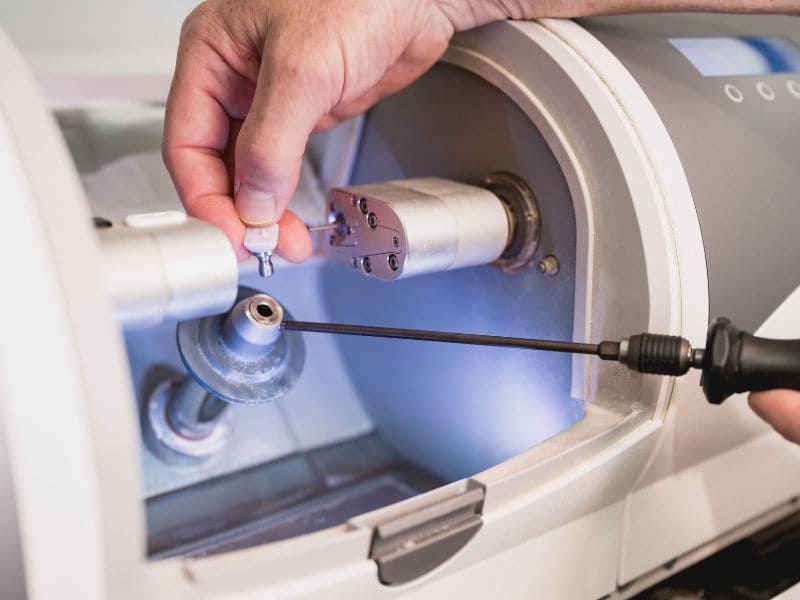
For certain restorations, our CEREC system can mill a permanent crown in-office the same day. No temporary, no second visit for the final crown.

20+ years in Apex

Dr. Kitzmiller opened this practice in 2002. Many of the patients he placed implants for years ago are still coming in for their regular checkups. That kind of long-term follow-up matters.

Easy to get to

Apex Medical Park, 1021 W. Williams Street. On-site parking, ground-level access. Patients come from Apex, Cary, Holly Springs, Fuquay-Varina, and Raleigh. The office is just off US-64.
Dental implant cost and payment options

Implant costs depend on a few things: how many implants you need, what type of restoration goes on top, whether you need bone grafting or a sinus lift, and how complex the case is overall. We give you a detailed cost breakdown at your consultation so you know the numbers before committing to anything.

We accept most dental insurance plans and file the claims for you. Coverage for implants varies by plan, so we check your benefits and let you know what your out-of-pocket is likely to be.

For patients who need to spread out payments, we offer CareCredit (monthly plans with promotional financing) and Sunbit (quick approval, no hard credit check). We also accept cash, checks, and credit cards. There is a 5% discount when treatment is paid in full upfront, arranged in advance.

No insurance? Our in-house Dental Savings Plan gives you immediate access to care with no copays, no deductibles, and no waiting periods.

Questions about cost? Call 919-362-1341 before your visit and our treatment coordinator can give you a general idea of what to expect.

Dental Implants FAQs

Got questions? We’ve put together answers to some of the most common things our patients ask—so you’re ready for your visit.

What are dental implants?

Dental implants are small titanium posts that are surgically placed into the jawbone to replace the root of a missing tooth. Once the bone heals around the post, a custom crown, bridge, or denture is attached on top. The result looks and functions like a natural tooth.

The titanium post itself can last decades with proper oral hygiene and regular dental visits. The crown or restoration on top may need replacement after 10 to 15 years depending on wear. Your dentist monitors both the implant and the restoration at routine checkups.

Most adults with missing teeth are candidates. The main requirements are adequate jawbone density to support the post, healthy gums, and overall health that allows for minor surgery. Patients with bone loss may still qualify if bone grafting is done beforehand. Dr. Kitzmiller evaluates all of this at your consultation.

Implants are anchored in the jawbone and do not rely on neighboring teeth or gum tissue. They preserve bone, do not require reshaping healthy teeth, and stay in place during eating and speaking. Bridges and dentures each have their place depending on the situation. Dr. Kitzmiller explains the tradeoffs so you can decide.

Local anesthesia is used during placement. Most patients describe mild to moderate soreness for a few days afterward, similar to a tooth extraction. Over-the-counter pain medication handles it for most people.

From consultation to final crown, the process typically takes 4 to 8 months. Most of that is healing time after the post is placed. If bone grafting is needed, add a few months to that timeline. Dr. Kitzmiller gives you a specific estimate at your first visit.

Bone loss does not automatically rule you out. Bone grafting can rebuild the area before an implant is placed. Dr. Kitzmiller uses 3D imaging to evaluate how much bone is available and whether grafting is necessary.

Coverage varies by plan. Some plans cover part of the implant procedure, the crown, or both. Our team checks your benefits and gives you a clear picture of your out-of-pocket cost before treatment starts. We also offer CareCredit, Sunbit, and an in-house savings plan.

Brush twice a day, floss around the implant, and keep up with your regular dental visits. Implants do not get cavities, but the gum tissue around them still needs to stay healthy. Avoiding tobacco also helps with long-term success.

The implant post and the final crown are placed at different stages because the bone needs time to heal around the post first. However, if you need a crown on a different tooth, our CEREC system can fabricate one the same day. A temporary restoration can be placed on the implant site while you heal.

Schedule a dental implant consultation in Apex, NC

If you are missing one tooth, several teeth, or a full arch, a consultation is the first step to figuring out what will work for you. Dr. Kitzmiller reviews your imaging, explains your options, and gives you a cost breakdown before you commit to anything.

Call 919-362-1341 or request an appointment online. Apex Medical Park, 1021 W. Williams Street, Suite 101, Apex, NC 27502.

We see patients from Apex, Cary, Holly Springs, Fuquay-Varina, Raleigh, and neighborhoods including downtown Apex, Salem Street, Beaver Creek, Scotts Mill, Haddon Hall, and along US-64.

Scroll to Top
Text Us Today